


There are fashion brands that dress women. And then there are fashion brands that understand them. Celine has always belonged to the second category — a house with the rare ability to speak directly to the way a specific kind of woman wants to move through the world: with intelligence, with confidence, and without needing to explain herself to anyone. From its origins as a Parisian children's shoe shop in 1945 to the minimalist revolution that made it the most talked-about brand in fashion, to its current chapter under Hedi Slimane, Celine's story is one of the most fascinating in luxury. Every pair of Celine glasses carries that history — a French house that has always known exactly who its woman is, even as that woman has evolved across eight decades.
Céline Vipiana and the Shop on Rue de Vivienne
The story begins not on a couture runway but on the streets of post-war Paris. In 1945, Céline Vipiana — a young Frenchwoman with an instinct for quality and a practical approach to luxury — opened a made-to-measure children's shoe shop on the Rue de Vivienne, in the heart of the city's commercial district. The shop was named simply after herself: Céline. It was a business born of necessity in a city rebuilding itself, and it thrived on the same principle that would define the brand for decades — beautiful objects, made well, for people who knew the difference. Through the late 1940s and 1950s, the business expanded steadily. Céline Vipiana and her husband Richard added women's shoes and leather goods to the offering, and the brand developed a reputation among Paris's professional women — the doctors, lawyers, architects, and executives who needed luxury that worked as hard as they did. The aesthetic was not showy. It was precise, functional, and deeply French in its understanding that true elegance requires no embellishment. By the 1960s, Celine had become a genuine fashion house, expanding into ready-to-wear and opening boutiques across France and internationally. The brand's visual identity crystallized around the arc logo — two interlocking C's that would become one of the most recognized symbols in French luxury — and a color palette of camel, black, and ivory that referenced the brand's leather goods heritage. Celine was never the loudest house in Paris. It was the most reliable — the one you came back to when you wanted something that would not let you down.
The LVMH Era and the Search for a New Voice
In 1987, Celine was acquired by LVMH — the luxury conglomerate that would eventually become the most powerful force in global fashion. Under LVMH, the brand went through a series of creative directors who each brought their own interpretation to the house's understated identity. Michael Kors, who served as creative director from 1997 to 2004, brought an American sportswear sensibility to the French house — cleaner, more commercial, and more accessible than what had come before. The collections were well-received and the business grew, but the brand was searching for something more specific, more urgent, more entirely its own. That search ended in 2008, when LVMH appointed a relatively unknown British designer named Phoebe Philo as creative director. What followed was one of the most extraordinary creative transformations in the history of fashion.
Phoebe Philo and the Minimalist Revolution
Phoebe Philo had previously served as creative director at Chloé, where she had built a devoted following with her instinct for wearable, feminine luxury. But her work at Celine — beginning with her debut collection for Autumn/Winter 2010 — was something else entirely. It was, from the very first look, a statement of intent: here is what luxury looks like when it is designed by a woman who actually wears clothes, for women who actually live in them.

Philo's Celine was defined by restraint — but it was never cold. Her collections featured the most precise tailoring in fashion, executed in materials of extraordinary quality: buttery leather, fluid silk, heavyweight wool, and the kind of cashmere that changes the way you think about cashmere. Silhouettes were relaxed but architectural. Colors were drawn from a palette of muted naturals, blacks, and the occasional perfectly chosen accent. Nothing was superfluous. Nothing was missing. The fashion world responded with a level of devotion that was almost unprecedented. The term "Philo-philes" entered the fashion vocabulary — a community of women who followed every collection, dissected every look, and felt, for the first time in a long time, that a luxury brand was genuinely speaking to them rather than at them. The Luggage tote became one of the defining accessories of the decade. The Trapeze bag, the Belt bag, and the Classic Box created a generation of Celine collectors who kept pieces in rotation for years. But Philo's influence at Celine extended beyond product. She redefined the image of the luxury fashion brand itself — steering advertising away from the overtly sexual and toward something more cerebral and self-possessed. Campaign images featured women of real presence — artists, intellectuals, writers — shot in natural light without heavy styling. Joan Didion appeared in a Celine campaign at eighty years old, in oversized sunglasses and a simple black top, looking more powerful than any conventional luxury model ever had. It was a statement about who Celine was for, and it was heard around the world. Philo left Celine in 2017, and her departure was mourned by the fashion community with an intensity that spoke to how completely she had defined the brand's identity during her tenure. She has since launched her own eponymous label, but her Celine legacy remains one of the most studied and referenced bodies of work in contemporary fashion.
Hedi Slimane and Celine Today
In 2018, LVMH appointed Hedi Slimane — the designer who had previously transformed both Dior Homme and Saint Laurent — as creative director of Celine, with a mandate that extended beyond fashion to music, art, and culture. Slimane made an immediate and deliberate break from the Philo era: he removed the accent from Céline, returned the brand to a rock-and-roll, youth-driven aesthetic, and rebuilt the visual identity around the bold, graphic sensibility that had defined his work at Saint Laurent. The transition was controversial — many of Philo's devoted following felt the new direction was a departure too far from the house's established identity. But Slimane's Celine has found its own audience and its own momentum, building a new chapter that is unapologetically different from what came before while remaining rooted in the French luxury tradition that has always defined the house.
Celine Eyewear: The Elegance of Restraint
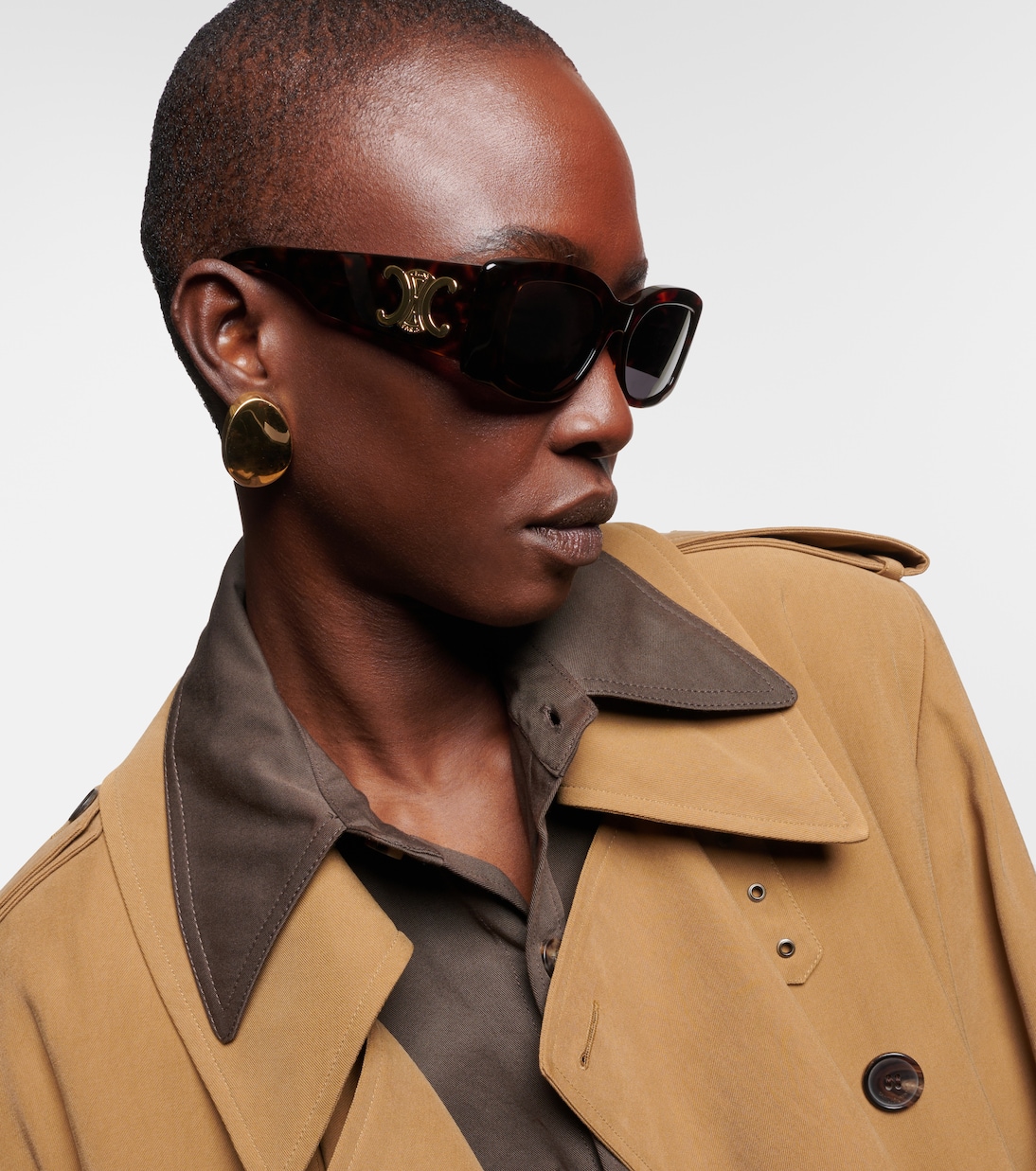
Through every chapter of its history, Celine eyewear has maintained the quality and restraint that define the house. The frames draw from both the minimalist precision of the Philo era and the bolder, graphic energy of the Slimane years — offering a range that speaks to the full spectrum of the Celine woman. Oversized acetate frames with clean, architectural proportions. Thin metal styles with subtle logo detailing. Cat-eye silhouettes that reference the house's French heritage without quoting it directly. Every pair is manufactured in premium materials with the finishing standards of a house that has understood quality since Céline Vipiana was hand-stitching children's shoes on the Rue de Vivienne. The full collection — sunglasses, optical frames, and every style in between — is available at designereyes.com, guaranteed authentic, shipped in original Celine packaging, and backed by our optical team for fit, prescription, and lens guidance.
Celine at Designer Eyes
Designer Eyes is an authorized Celine retailer. To wear Celine is to participate in a conversation that has been going on since 1945 — one about what luxury looks like when it is built for the woman who wears it, rather than the room she walks into. That conversation has taken many forms over eight decades. In eyewear, it looks like this: clean, confident, and completely assured.